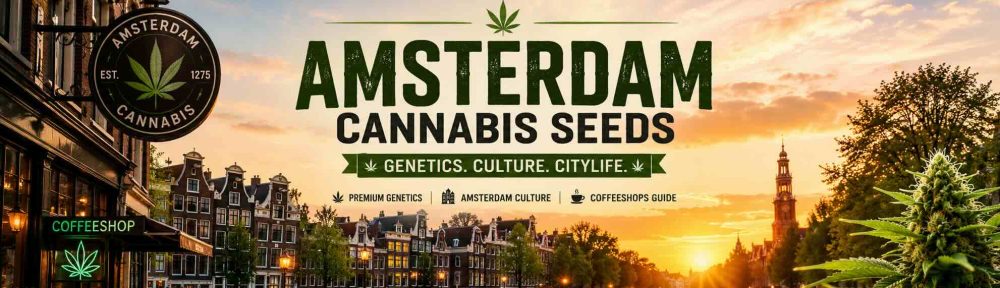
Modern Cannabis Seeds and Amsterdam Grow Culture
Amsterdam became internationally associated with cannabis culture because the city developed a unique social atmosphere where tourism, nightlife, coffeeshop culture, music, design, and cannabis communities intersected for decades. Visitors from around the world traveled to Amsterdam not only because of cannabis itself, but because of the broader cultural identity surrounding the city.
Coffeeshops became one of the most recognizable symbols of Amsterdam cannabis culture. These spaces helped normalize cannabis socially while creating environments where locals and tourists could experience a more open and relaxed cannabis atmosphere compared to many other countries during the same period.
Dutch cannabis culture also played a major role in the evolution of modern cannabis genetics. Breeders working in the Netherlands helped stabilize many famous strains and contributed heavily to the rise of seed banks, feminized seeds, and modern hybrid breeding. Amsterdam became closely connected with cannabis innovation and genetic experimentation.
Tourism transformed cannabis culture further. Travelers visiting Amsterdam often combined coffeeshops with nightlife, canals, cycling culture, festivals, museums, and independent creative scenes. Cannabis became part of a broader urban lifestyle associated with freedom, experimentation, and alternative culture.
Modern cannabis seed culture remains strongly connected to Amsterdam because the city helped establish many of the foundations of contemporary cannabis branding, cultivation education, and seed distribution. Seed catalogs, grow guides, and cannabis magazines became increasingly visible through Dutch cannabis culture.
Amsterdam also influenced cannabis aesthetics globally. Coffeeshop interiors, poster design, cannabis packaging, street culture, and independent creative communities all contributed to the visual identity associated with cannabis culture internationally.
Today, Amsterdam still attracts cannabis enthusiasts interested in genetics, coffeeshop history, urban culture, nightlife, and cultivation traditions. The city remains deeply associated with the international history of cannabis despite changing laws and evolving regulations.
For many visitors and growers, Amsterdam represents more than tourism. It symbolizes one of the most influential cultural centers in the history of modern cannabis culture.
How Amsterdam Became Linked to Cannabis Culture
Amsterdam became internationally associated with cannabis culture because the city developed a unique social atmosphere where tourism, nightlife, coffeeshop culture, music, design, and cannabis communities intersected for decades. Visitors from around the world traveled to Amsterdam not only because of cannabis itself, but because of the broader cultural identity surrounding the city.
Coffeeshops became one of the most recognizable symbols of Amsterdam cannabis culture. These spaces helped normalize cannabis socially while creating environments where locals and tourists could experience a more open and relaxed cannabis atmosphere compared to many other countries during the same period.
Dutch cannabis culture also played a major role in the evolution of modern cannabis genetics. Breeders working in the Netherlands helped stabilize many famous strains and contributed heavily to the rise of seed banks, feminized seeds, and modern hybrid breeding. Amsterdam became closely connected with cannabis innovation and genetic experimentation.
Tourism transformed cannabis culture further. Travelers visiting Amsterdam often combined coffeeshops with nightlife, canals, cycling culture, festivals, museums, and independent creative scenes. Cannabis became part of a broader urban lifestyle associated with freedom, experimentation, and alternative culture.
Modern cannabis seed culture remains strongly connected to Amsterdam because the city helped establish many of the foundations of contemporary cannabis branding, cultivation education, and seed distribution. Seed catalogs, grow guides, and cannabis magazines became increasingly visible through Dutch cannabis culture.
Amsterdam also influenced cannabis aesthetics globally. Coffeeshop interiors, poster design, cannabis packaging, street culture, and independent creative communities all contributed to the visual identity associated with cannabis culture internationally.
Today, Amsterdam still attracts cannabis enthusiasts interested in genetics, coffeeshop history, urban culture, nightlife, and cultivation traditions. The city remains deeply associated with the international history of cannabis despite changing laws and evolving regulations.
For many visitors and growers, Amsterdam represents more than tourism. It symbolizes one of the most influential cultural centers in the history of modern cannabis culture.
Coffeeshops and the Social Side of Cannabis
Amsterdam became internationally associated with cannabis culture because the city developed a unique social atmosphere where tourism, nightlife, coffeeshop culture, music, design, and cannabis communities intersected for decades. Visitors from around the world traveled to Amsterdam not only because of cannabis itself, but because of the broader cultural identity surrounding the city.
Coffeeshops became one of the most recognizable symbols of Amsterdam cannabis culture. These spaces helped normalize cannabis socially while creating environments where locals and tourists could experience a more open and relaxed cannabis atmosphere compared to many other countries during the same period.
Dutch cannabis culture also played a major role in the evolution of modern cannabis genetics. Breeders working in the Netherlands helped stabilize many famous strains and contributed heavily to the rise of seed banks, feminized seeds, and modern hybrid breeding. Amsterdam became closely connected with cannabis innovation and genetic experimentation.
Tourism transformed cannabis culture further. Travelers visiting Amsterdam often combined coffeeshops with nightlife, canals, cycling culture, festivals, museums, and independent creative scenes. Cannabis became part of a broader urban lifestyle associated with freedom, experimentation, and alternative culture.
Modern cannabis seed culture remains strongly connected to Amsterdam because the city helped establish many of the foundations of contemporary cannabis branding, cultivation education, and seed distribution. Seed catalogs, grow guides, and cannabis magazines became increasingly visible through Dutch cannabis culture.
Amsterdam also influenced cannabis aesthetics globally. Coffeeshop interiors, poster design, cannabis packaging, street culture, and independent creative communities all contributed to the visual identity associated with cannabis culture internationally.
Today, Amsterdam still attracts cannabis enthusiasts interested in genetics, coffeeshop history, urban culture, nightlife, and cultivation traditions. The city remains deeply associated with the international history of cannabis despite changing laws and evolving regulations.
For many visitors and growers, Amsterdam represents more than tourism. It symbolizes one of the most influential cultural centers in the history of modern cannabis culture.
Dutch Breeding and Modern Cannabis Genetics
Amsterdam became internationally associated with cannabis culture because the city developed a unique social atmosphere where tourism, nightlife, coffeeshop culture, music, design, and cannabis communities intersected for decades. Visitors from around the world traveled to Amsterdam not only because of cannabis itself, but because of the broader cultural identity surrounding the city.
Coffeeshops became one of the most recognizable symbols of Amsterdam cannabis culture. These spaces helped normalize cannabis socially while creating environments where locals and tourists could experience a more open and relaxed cannabis atmosphere compared to many other countries during the same period.
Dutch cannabis culture also played a major role in the evolution of modern cannabis genetics. Breeders working in the Netherlands helped stabilize many famous strains and contributed heavily to the rise of seed banks, feminized seeds, and modern hybrid breeding. Amsterdam became closely connected with cannabis innovation and genetic experimentation.
Tourism transformed cannabis culture further. Travelers visiting Amsterdam often combined coffeeshops with nightlife, canals, cycling culture, festivals, museums, and independent creative scenes. Cannabis became part of a broader urban lifestyle associated with freedom, experimentation, and alternative culture.
Modern cannabis seed culture remains strongly connected to Amsterdam because the city helped establish many of the foundations of contemporary cannabis branding, cultivation education, and seed distribution. Seed catalogs, grow guides, and cannabis magazines became increasingly visible through Dutch cannabis culture.
Amsterdam also influenced cannabis aesthetics globally. Coffeeshop interiors, poster design, cannabis packaging, street culture, and independent creative communities all contributed to the visual identity associated with cannabis culture internationally.
Today, Amsterdam still attracts cannabis enthusiasts interested in genetics, coffeeshop history, urban culture, nightlife, and cultivation traditions. The city remains deeply associated with the international history of cannabis despite changing laws and evolving regulations.
For many visitors and growers, Amsterdam represents more than tourism. It symbolizes one of the most influential cultural centers in the history of modern cannabis culture.
Tourism, Creative Scenes, and the Amsterdam Experience
Amsterdam became internationally associated with cannabis culture because the city developed a unique social atmosphere where tourism, nightlife, coffeeshop culture, music, design, and cannabis communities intersected for decades. Visitors from around the world traveled to Amsterdam not only because of cannabis itself, but because of the broader cultural identity surrounding the city.
Coffeeshops became one of the most recognizable symbols of Amsterdam cannabis culture. These spaces helped normalize cannabis socially while creating environments where locals and tourists could experience a more open and relaxed cannabis atmosphere compared to many other countries during the same period.
Dutch cannabis culture also played a major role in the evolution of modern cannabis genetics. Breeders working in the Netherlands helped stabilize many famous strains and contributed heavily to the rise of seed banks, feminized seeds, and modern hybrid breeding. Amsterdam became closely connected with cannabis innovation and genetic experimentation.
Tourism transformed cannabis culture further. Travelers visiting Amsterdam often combined coffeeshops with nightlife, canals, cycling culture, festivals, museums, and independent creative scenes. Cannabis became part of a broader urban lifestyle associated with freedom, experimentation, and alternative culture.
Modern cannabis seed culture remains strongly connected to Amsterdam because the city helped establish many of the foundations of contemporary cannabis branding, cultivation education, and seed distribution. Seed catalogs, grow guides, and cannabis magazines became increasingly visible through Dutch cannabis culture.
Amsterdam also influenced cannabis aesthetics globally. Coffeeshop interiors, poster design, cannabis packaging, street culture, and independent creative communities all contributed to the visual identity associated with cannabis culture internationally.
Today, Amsterdam still attracts cannabis enthusiasts interested in genetics, coffeeshop history, urban culture, nightlife, and cultivation traditions. The city remains deeply associated with the international history of cannabis despite changing laws and evolving regulations.
For many visitors and growers, Amsterdam represents more than tourism. It symbolizes one of the most influential cultural centers in the history of modern cannabis culture.
Additional information related to culture, tourism, agriculture, and cannabis policy can be explored through the Food and Agriculture Organization of the United Nations.
Amsterdam continues influencing cannabis culture globally because it helped connect genetics, urban lifestyle, tourism, creativity, and cultivation culture into one internationally recognizable identity. Even as global legalization expands, Amsterdam remains one of the symbolic capitals of cannabis history.
The future of Amsterdam cannabis culture will likely continue evolving alongside tourism, seed genetics, modern breeding, sustainability, and international cannabis communities while preserving the city’s unique cultural legacy.
In This Guide
- Amsterdam became a global cannabis hub through its mix of tourism, nightlife, coffeeshops, and creative culture.
- Dutch breeders helped shape modern cannabis genetics, including stabilized strains, feminized seeds, and hybrid breeding.
- Coffeeshops normalized cannabis socially and became a defining part of Amsterdam's cultural identity.
- The city influenced cannabis branding, education, packaging, and visual aesthetics around the world.
Frequently Asked Questions
Why is Amsterdam so strongly associated with cannabis culture?
Amsterdam developed a unique mix of coffeeshops, nightlife, tourism, and creative culture that made cannabis part of the city’s public identity.
How did Dutch breeders influence modern cannabis seeds?
Breeders in the Netherlands helped stabilize well-known strains and supported the growth of seed banks, feminized seeds, and hybrid genetics.
What role did coffeeshops play in Amsterdam cannabis culture?
Coffeeshops created relaxed, social spaces where cannabis could be experienced more openly and became one of the city’s most recognizable symbols.
Why do cannabis enthusiasts still visit Amsterdam today?
Many visitors are interested in the city’s genetics history, coffeeshop culture, nightlife, museums, and broader urban atmosphere.
Did Amsterdam influence cannabis branding and design?
Yes. Coffeeshop interiors, packaging, posters, and other creative elements from Amsterdam helped shape cannabis aesthetics internationally.